History of Quinn Chapel A.M.E. church
1825 -2025
“200th anniversary”
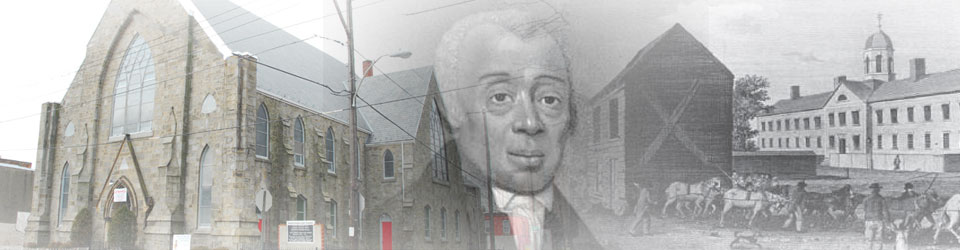
Reverend Paul Quinn, a circuit-riding missionary who had traveled on horseback from Philadelphia, Pennsylvania, which is the seat of African Methodism in the United States, to Brooklyn, founded Quinn Chapel in 1825. Upon his arrival in Brooklyn, he molded a small group of individuals who met in the home of John and Priscilla Baltimore into an A.M.E. congregation.
Mrs. Priscilla Baltimore became one of his staunch supporters. Because there was no house of worship in the town, their meetings were held in private homes. Due to the growing power of slavery, they were necessarily obliged to proceed cautiously, but preparation was in the making to permanently establish and build the first church. The first A.M.E. church in this area was organized by those who met in Mrs. Baltimore’s home. Mrs. Priscilla Baltimore was born in Bourbon County, Kentucky, on May 13, 1801. When only 10 years old, she was sold by her master, who was also her father, for $1,100.00 to the ex-governor of Missouri. She was given the privilege of purchasing her freedom from her Christian owner after seven years, for the same purchase price. It is believed that she earned the money to purchase her freedom as a cook, nurse, or seamstress, which were roles many black women held at the time.
It should be noted that Priscilla Baltimore was known as “mother of black Brooklyn”. ” She was not only instrumental in helping to establish Quinn Chapel, but also helpful along with her husband and others in the formation of the town now known as Brooklyn. She was a tireless worker for the church and the cause of freedom, helping many slaves reach freedom. She was often called upon to risk her life in ferrying the elder Quinn and others across the river at night, so they could sneak into St. Louis and spread the word of salvation and liberation.
In 1836, a layman named Jordan Winston Early was ordained by Paul Quinn. They had met on the river, as Jordan Early was one of the many black boat workers who worked there. Mr. Early is one of the forgotten heroes of African Methodism. He was born in 1814 in Virginia, before the death of Richard Allen, the founder of the A.M.E. Church. he was a master builder and built the first A.M.E. Church in the state of Illinois at Brooklyn, also known as Lovejoy, which is located across the Mississippi River from St. Louis, Missouri.
Reverend Quinn sought out other loyal Christians who had formerly been members of the Methodist Episcopal Church. Among the members he met were Thomas Ailsworth and Shadrack Stewart, who were once residents of Alton, Illinois, where the first AME church in Madison County was organized. Quinn traveled in all directions, making Brooklyn his headquarters while in the Midwest. He labored hard during his lifetime and served his generation well. He carried the battle of Christianity to the gates of hell, as Hannibal carried it to the gates of Rome. The first church was built between 4th & 5th streets on Short Street in Brooklyn. Later, the church was torn down and moved to its present location, 108 North 5th Street. The church was reorganized as an A.M.E. church in 1839 and named Quinn Chapel after Paul Quinn, who had then become affiliated with the African Methodist Episcopal Church connection. The church was also rebuilt at its present location in 1878 after being destroyed by fire. The church’s name prior to Quinn was the Brooklyn Methodist church.
The church played a significant role in the Underground Railroad, which helped slaves from the South, Missouri, and other parts of the country reach freedom by venturing north; some went on to Canada. In Brooklyn, fugitives were hidden in the A.M.E. Church or private homes until they could be smuggled through the woods to Alton, Illinois, a major stop on one of the best-known underground lines. I view that nothing about the slave movement was recorded; there are no records of how long the church played a role in this movement. In remembering and talking to some of the older members in the 1940’s, such as Mr. Anthony Speed and others, it is believed that Nat Turner and Sojourner Truth may have ventured through Brooklyn, as they were very instrumental in the slave movement. As the 2nd-oldest church established by Quinn west of the Allegheny Mountains, Quinn Chapel played a very important part in the bicentennial celebration marking 200 years of the A.M.E. Church, established in 1787. The event took place in 1987. bishop Anderson presented the plaque (bi-centennial historical marker) memorializing William Paul Quinn to the church.
During the years of prosperity and growth, Quinn Chapel has had many pastors, ministers, and members who have contributed significantly to its growth. The following ministers, as reported by some older members of the church, were pastors of historical Quinn. Reverends Spruce, Tinwich Burton, Smith Sydes, Tinsley, Kato, Fisher, Huff, Brewer, King, Attaway, Speech, Allen, Archer, Givhan, Oliver, Benefield, Louis, Martin, Covington, Davis, Bishop, Henry, McGraw, Burrell (first woman pastor), John Howell, Rev. Devione Burrell, Rick Jackson, AJ Jackson, and Reverend Frenita Hall Brewer who is our current pastor. Some of the pastors listed above later became presiding elders and officers of the Illinois A.M.E. Church Connection.
The church is still embarking on projects to renovate and beautify our church, both the exterior and interior. In so doing, we plan to maintain the “historical” significance of our church. A handicap chairlift has been installed in the front entrance of our church. The structure of our church, along with all renovation efforts, is a priority, including installing windows and completely renovating the office area. Due to the age of our church’s structure, all renovation efforts are considered priorities. Some of the renovation has been accomplished. Our church is now listed on the national Underground Railroad Network to Freedom per a letter received from the US Department of the Interior (National Park Service) dated April 15, 2013, accompanied by a signed certificate dated the same date as the letter. We are now working on a historical marker to be placed on the church’s property. The bicentennial plaque and certificate will be placed on the historical marker.
We, the members of Quinn Chapel A.M.E. Church, are proud to be part of this little mission founded 196 years ago, and are enthused to know that our church is the oldest A.M.E. church west of the Allegheny Mountains.
Quinn Chapel A.M.E. church
compiled and updated by George J. Mcshan, June 2019